
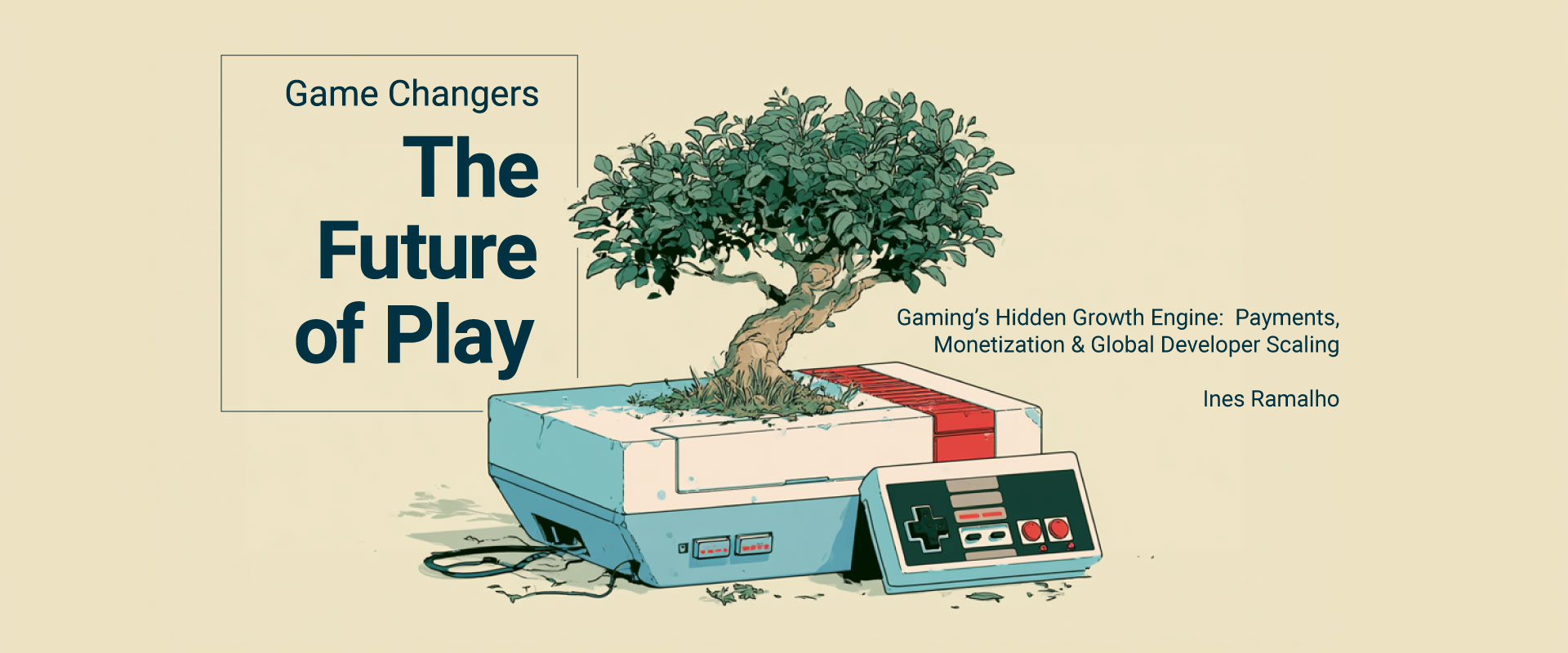

Gaming Growth Has Shifted Beyond the Game Itself
For years, the gaming industry measured success by one thing: the quality of the game. But according to Ines Ramalho, Business Development Manager at Xsolla, that mindset is no longer enough.
Today’s gaming success is defined by something much broader: ecosystems, payments infrastructure, and global player experience design. In this episode of Game Changers: The Future of Play, we explore how developers are scaling globally—and why many still struggle to break through.
Global Growth Is Not Universal—It’s Local
One of the most important insights from the conversation is simple, “there is no universal growth strategy.” Every region behaves differently:
- Payment preferences vary dramatically
- Player behavior is culturally specific
- Discovery channels differ by market
- Trust signals are region-dependent
Successful studios don’t just localize language—they localize business models.
This is where many developers fail: they assume global scaling is replication. In reality, it’s adaptation.
Payments Are the Hidden Growth Engine
Payments are often overlooked—but they directly impact: conversion rates, player trust, retention, and lifetime value. If a user cannot pay with their preferred method, they simply abandon the transaction. From Pix in Brazil to region-specific wallets in Asia and Europe, alternative payment methods are no longer optional—they are essential infrastructure.
Payments are not a backend function—they are part of the player experience.
Developers Don’t Need Vendors—They Need Partners
Modern gaming ecosystems require more than service providers. They require partners who:
- Understand developer goals
- Remove operational complexity
- Enable global scaling
- Support ecosystem growth
The shift is from transactional relationships to strategic collaboration ecosystems.
AI Will Reshape Gaming Operations
AI is already transforming game production workflows, player personalization, live ops and customer support systems. Yet, perhaps the most important shift is that
AI enables small teams to operate at large-scale execution capacity. So a small group of garage style game developers can produce a game like big game studios. However, human creativity remains essential:
- Community building
- Storytelling
- Player engagement
- Emotional experience design
The future is not AI replacing developers—it is AI amplifying them.
Final Insight: Ecosystems Win, Not Games Alone
The most successful studios are no longer just building games. They are building:
- Communities
- Monetization ecosystems
- Cross-platform experiences
- Direct-to-consumer relationships
Gaming is no longer a product—it is a living ecosystem.
Q: Why is gaming monetization strategy important?
A: Because it directly impacts conversion, trust, and global scalability beyond game design.
Q: What is the biggest challenge in scaling games globally?
A: Fragmentation across payments, regulations, platforms, and user behavior.
Q: How does AI impact gaming development?
A: It improves efficiency in production, personalization, and player support while enabling smaller teams to scale.