
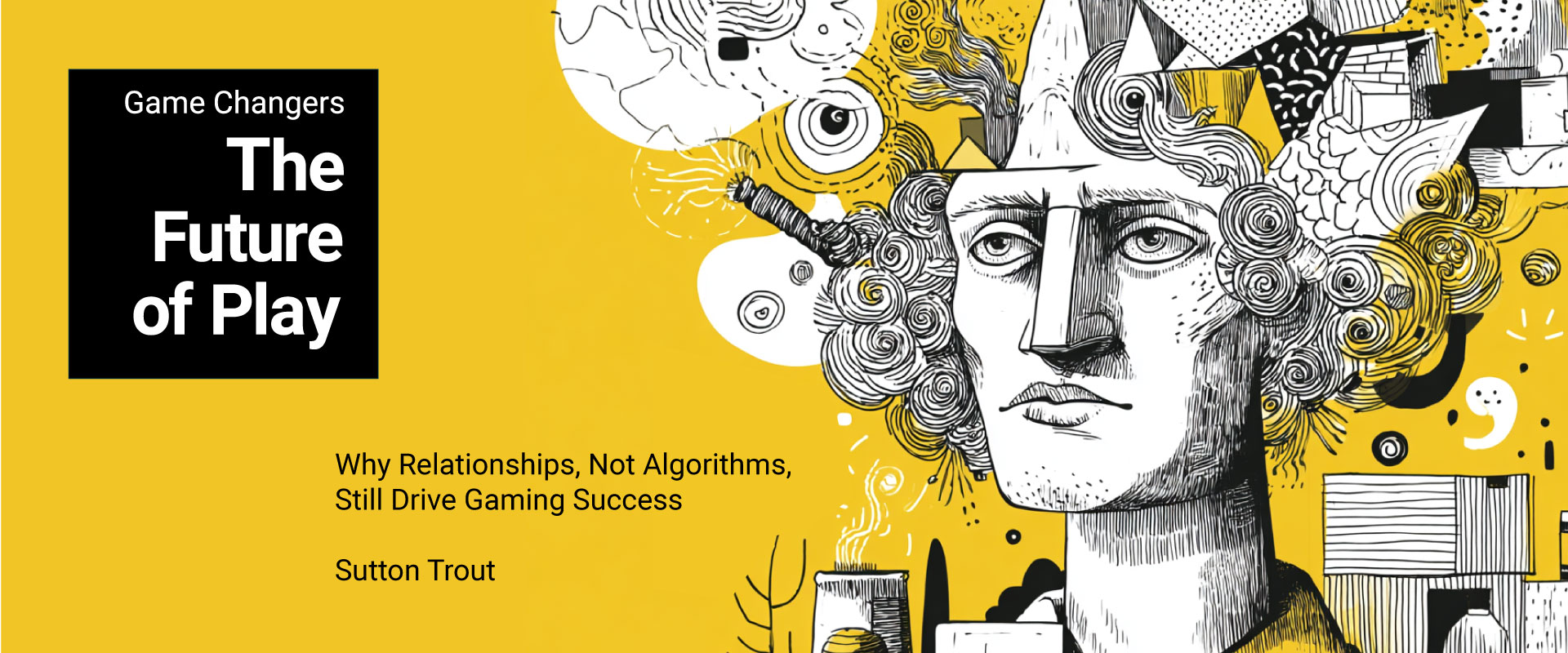

The gaming industry has evolved from boxed console experiences into always-on digital ecosystems powered by live services, creator communities, AI tools, and global player engagement. But according to gaming growth strategist Sutton Trout, one thing still matters most: relationships.
On a recent episode of Game Changers: The Future of Play, Sutton Trout — whose career includes leadership roles connected to companies like Supercell, Sony, and Warner Bros. — shared lessons from more than two decades in gaming partnerships, monetization, user acquisition, and long-term growth strategy.
The conversation revealed a major shift happening across the gaming industry: success is no longer just about acquiring users. It’s about building communities players want to stay in for years.
The Era of Player Longevity
Gaming companies once focused heavily on downloads and rapid user acquisition. Today, retention and player sentiment are becoming far more valuable metrics.
Sutton pointed to games like Clash of Clans, Roblox, and Monopoly Go! as examples of titles that succeed because they create habits, emotional investment, and long-term communities.
Modern gaming audiences face endless entertainment options:
- Short-form video
- Social platforms
- Streaming content
- Live creator ecosystems
- Mobile games
- Console experiences
Because attention is now the most competitive resource, successful games must become part of a player’s lifestyle — not just another app.
This shift changes how studios think about:
- Monetization strategy
- Community management
- Live operations
- Lifecycle marketing
- Retention campaigns
- Creator partnerships
AI in Gaming: Productivity Over Replacement
One of the most compelling parts of the discussion focused on AI in gaming and entertainment.
Rather than seeing AI as a replacement for creativity, Sutton described it as a productivity accelerator.
AI tools are already helping gaming professionals:
- Organize meetings
- Generate summaries and action items
- Speed up production workflows
- Build presentations and strategy decks
- Iterate on creative concepts faster
This aligns with broader trends happening across the gaming and entertainment industries, where AI is increasingly being used to streamline operations while keeping humans in the creative loop.
Related reading:
However, Sutton made an important distinction: data and AI should support creativity — not replace it.
He warned against over-optimizing games around analytics alone, emphasizing that the best games are built around emotional engagement, storytelling, and fun.
Why Strategic Partnerships Matter More Than Ever
Gaming is no longer a siloed industry.
Studios now collaborate across:
- Influencer ecosystems
- Esports
- Streaming platforms
- Brands
- Entertainment franchises
- AI technology providers
- Creator communities
Sutton emphasized that strategic growth is fundamentally collaborative. Great partnerships are not transactional relationships — they are long-term alliances built around shared goals.
That philosophy is increasingly important as gaming companies look for scalable growth without relying exclusively on paid advertising.
The most successful organizations are building ecosystems, not just products.
The Human Side of Gaming Growth
One of the strongest themes throughout the podcast was the importance of human connection.
Despite the rise of automation, AI, and distributed teams, Sutton believes relationship-building will become even more important over the next several years.
Gaming professionals entering the industry should focus on:
- Communication skills
- Collaboration
- Strategic thinking
- Community building
- Cross-functional leadership
- Partnership development
Technology may accelerate production, but human trust still drives long-term business success.
Final Thoughts
The future of gaming won’t belong solely to the companies with the biggest budgets or the most advanced algorithms.
It will belong to the companies that:
- Respect players’ time
- Build meaningful communities
- Use AI responsibly
- Foster creative collaboration
- Prioritize relationships over pure metrics
As gaming continues evolving alongside AI, live services, and creator-driven ecosystems, the industry’s biggest competitive advantage may still be something fundamentally human.