
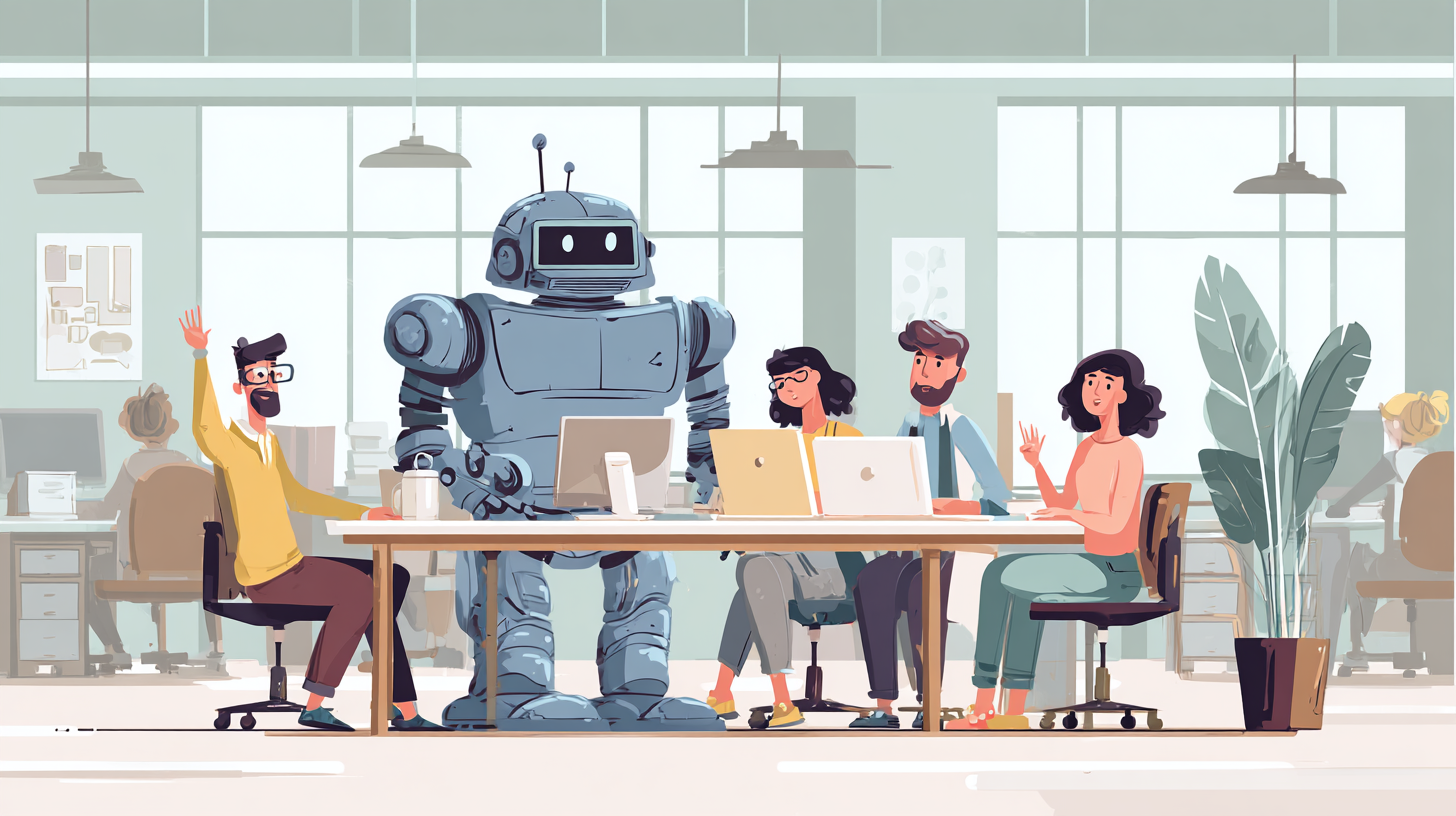

New research from Yale shows AI hasn’t disrupted U.S. jobs as feared — meanwhile, companies like NOHOLD are proving that AI assistants boost productivity, compliance, and decision-making when deployed strategically.
Executive Summary
AI isn’t coming — it’s already here. But despite widespread headlines about disruption and mass unemployment, recent data suggests the true story is more measured, more strategic — and full of opportunity.
According to a new study from Yale and the Brookings Institution, generative AI tools like ChatGPT have not yet triggered sweeping labor displacement in the U.S. workforce. Instead, we’re seeing something quieter — an evolution of tasks and roles, not their elimination.
Forward-looking companies are seizing this moment not to panic, but to plan. AI assistants — especially when deployed using a structured, compliant, and secure framework — can help organizations increase productivity, reduce errors, improve compliance, and scale faster.
Companies like NOHOLD are leading the way, showing that AI assistants, when built right, are not only safe — they’re essential.
What the Yale Study Really Says: The Sky Isn’t Falling
In partnership with Brookings, Yale’s Budget Lab recently examined whether generative AI has displaced American workers. The answer? Not yet — and not at scale.
Here are key insights from the research:
- No significant job losses tied to AI: The study found no economy-wide employment collapse attributable to AI.
- Shifts, not shocks: Tasks are being reshaped in many fields — especially tech and knowledge work — but people are not being removed from the equation.
- Narrative vs. reality: While some executives may amplify AI’s potential disruption (to court investors or justify restructuring), the data tells a more balanced story.
- Gradual adaptation: Roles are evolving as AI augments human capability, not replaces it entirely.
The takeaway for decision-makers: you have time — but not forever. This is the moment to act, not react.
AI Assistants Done Right: NOHOLD’s Enterprise Approach
Where Yale provides the macro view, NOHOLD provides a roadmap for pragmatic, responsible adoption.
Their philosophy: AI assistants should augment, not replace. And they should be secure, compliant, and purpose-built to align with real business needs.
Key pillars of NOHOLD’s approach include:
Hybrid Intelligence
NOHOLD combines generative AI (for flexibility and language understanding) with deterministic logic (for reliability and compliance). This approach ensures AI assistants remain predictable in high-stakes use cases like healthcare, government, and financial services.
Controlled Rollouts
Rather than deploying massive, untested systems, NOHOLD recommends starting with focused use cases — like Tier 1 support, internal help desks, or policy guidance — and scaling based on results.
Embedded Context & Media
AI assistants built on NOHOLD’s platform can deliver rich, multimodal answers using diagrams, videos, documents, and knowledge bases — dramatically improving user comprehension and trust.
Human Escalation Built-In
AI isn’t perfect — and shouldn’t pretend to be. NOHOLD ensures every assistant offers easy escalation to human agents, protecting user experience and business continuity.
Enterprise-Grade Security & Compliance
From SOC2 and HIPAA to PCI standards, NOHOLD’s SICURA platform is designed for organizations that require trustworthy, traceable, and auditable AI deployments.
Measurable ROI
NOHOLD focuses on business impact: reduced support costs, faster onboarding, higher customer satisfaction, increased compliance — and ultimately, scalable expertise on demand.
Why C-Suite Leaders Should Take Notice
Whether you’re a CEO, CIO, COO, or CHRO, the implications of this shift are immediate and actionable:
1. Productivity without Burnout
AI assistants handle repetitive or time-consuming tasks, freeing up your teams for higher-value work — from strategy to innovation.
2. Compliance You Can Count On
With deterministic rules and structured workflows, AI assistants ensure policy adherence, reduce regulatory risk, and support consistent outputs.
3. Accelerated Onboarding and Knowledge Transfer
New employees and customers ramp up faster when AI agents can provide round-the-clock, self-serve access to institutional knowledge.
4. Lower Costs, Higher Satisfaction
Whether it’s deflecting Tier 1 tickets or guiding users through complex forms, AI assistants reduce the burden on human teams while improving the experience for users.
5. Data-Driven Insights
Every AI interaction can be logged, analyzed, and improved — giving leaders real-time visibility into pain points, demand trends, and engagement.
Common Objections — And Why They’re Outdated
“AI will replace us.”
Yale’s data says otherwise. Smart leaders are using AI to enhance human roles, not eliminate them.
“It’s not safe or compliant.”
That’s only true when AI is deployed carelessly. NOHOLD’s platform proves that compliance, auditability, and control are possible with the right architecture.
“It’s not ready.”
Enterprise-grade AI assistants are already in production — helping cities, hospitals, and corporations streamline and scale today.
“It’s just a trend.”
Generative AI may feel new, but the trajectory is clear: those who embrace it now will outperform those who wait.
The Bottom Line: AI Is a Strategic Imperative
We’re at an inflection point. AI isn’t a passing fad or a future threat — it’s a present-day tool that can give your organization a durable edge.
✅ The jobs aren’t vanishing overnight — but the nature of work is changing.
✅ Your competitors are already piloting and scaling AI solutions.
✅ Your teams are asking for better tools, smarter support, and less friction.
✅ Your customers expect 24/7, intelligent service — and AI can deliver it.
AI is not the enemy — it’s the enabler.
If you’re ready to explore how AI assistants can unlock productivity, reduce risk, and scale your organization’s knowledge, now is the time to act.
Source: Jacobs, S. (2025, October 2). New research from Yale says that AI has not yet disrupted US employment. TechSpot. https://www.techspot.com/news/109707-new-research-yale-ai-has-not-disrupted-us.html